
Plastic strapping devices
In addition, practical strapping sets – consisting of a strapping tool, strap, dispenser and sealing clips – enable you to get started immediately with everything perfectly coordinated.
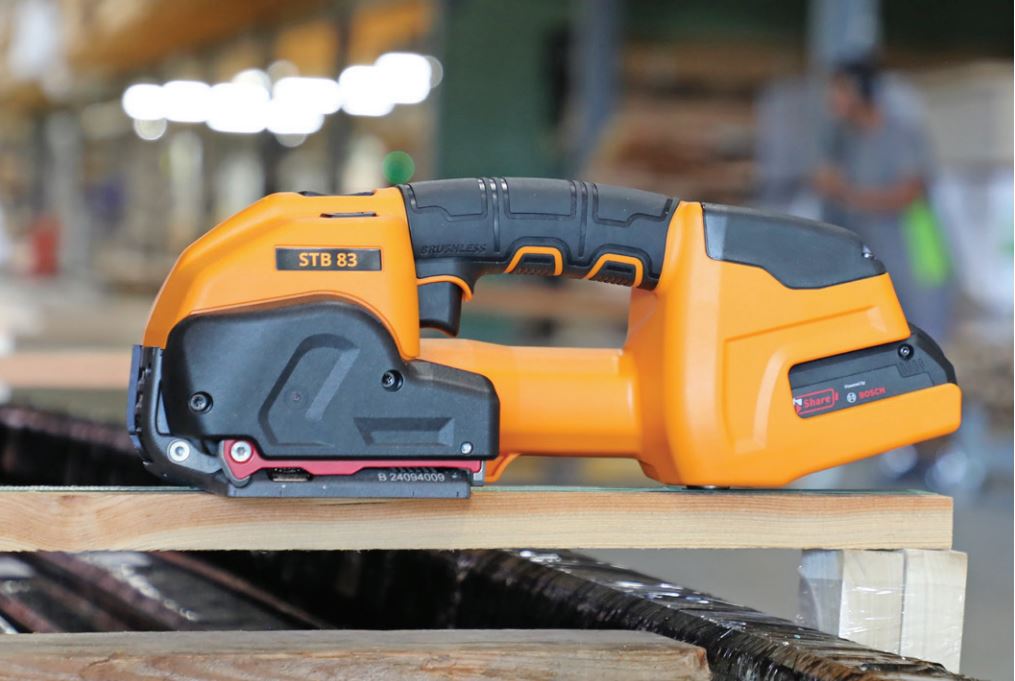
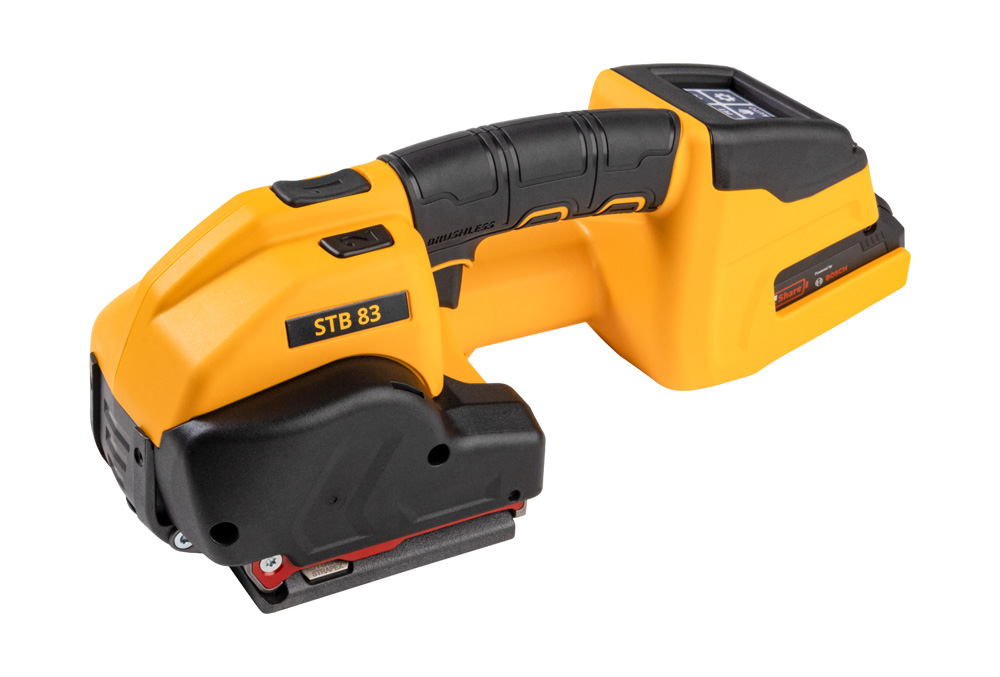
Battery strapping tools
Mobile battery-powered strapping tools for strapping with polypropylene (PP strapping) and polyester strapping (PET strapping).
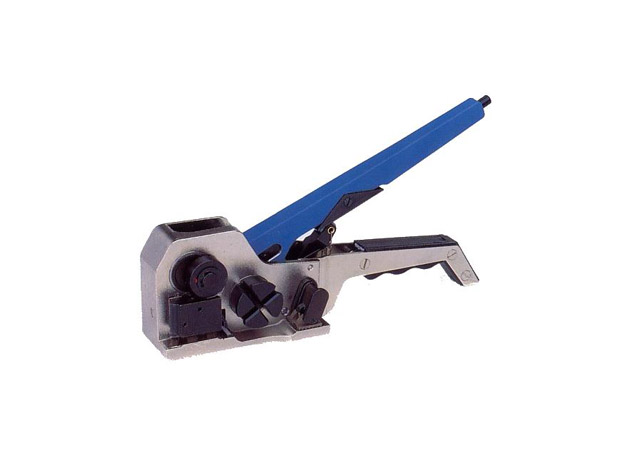
Manual strapping tools
The manual strapping tools can be used for all types of packages. Enables fast and flexible strapping...
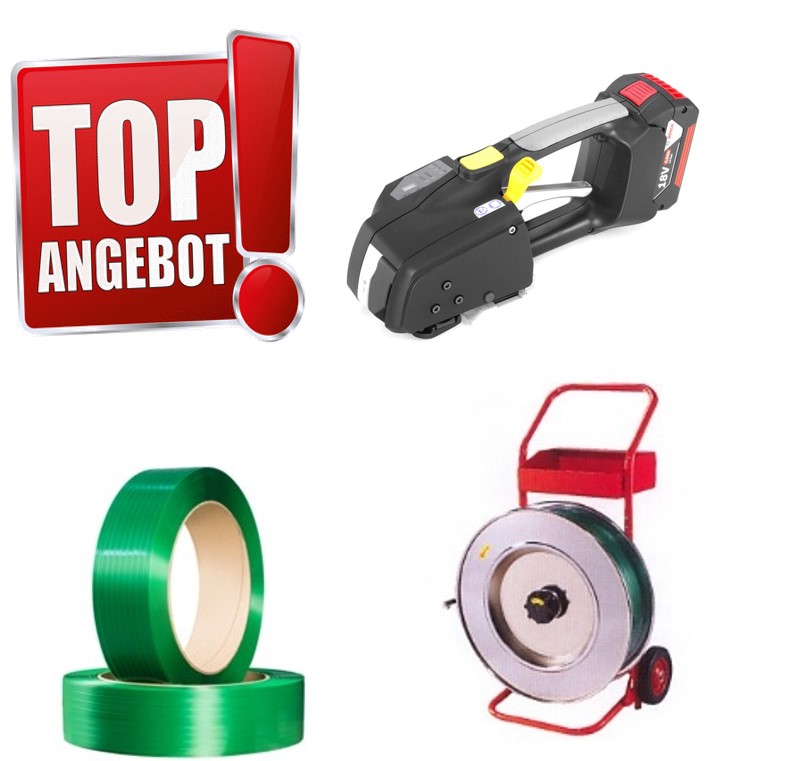
Set offers
You will find professional sets here to suit your application. Consisting of tensioning device, tape, dispenser and accessories...
Strapping tools for plastic strapping – use, mode of operation and selection criteria
Strapping tools for plastic strapping are key tools in modern load securing and packaging technology. They are used to tightly stretch plastic strapping – usually made of polypropylene (PP) or polyester (PET) – around packages, boxes or pallets and secure them. This technology ensures that goods remain securely fixed during storage and transport and minimises external influences such as vibrations or shifts.
Materials and properties of plastic strapping
Choosing the right strapping band is crucial for strapping efficiency. Plastic bands are mainly made of PP (polypropylene) or PET (polyester).
- PP strapping is lightweight, flexible and suitable for light to medium-weight packaged goods. It is characterised by good elasticity properties.
- PET strapping has a higher tensile strength and is suitable for heavier loads and long transport distances. It is also weather-resistant and retains its tension over a long period of time.
Strapping tools for plastic straps must be tailored to the specific properties of these materials in order to ensure optimum tension and secure fastenings.
How strapping machines work
The workflow when using strapping tools for plastic straps is divided into three main steps:
- Positioning the strap around the package or pallet.
- Tensioning the belt to the desired tensile force.
- Sealing the tape, either mechanically, using friction welding, or with metal or plastic seals.
A distinction is made between manual, semi-automatic and fully automatic devices.
- Manual strapping tools are hand-held and are suitable for smaller quantities or mobile use.
- Semi-automatic devices assist with the tensioning and sealing process, but require manual application of the tape.
- Fully automatic strapping machines operate largely independently and are often integrated into production and packaging lines.
Types of closures
Various types of fasteners are used in strapping tools for plastic straps:
- Metal or plastic seals: Here, the tape is mechanically secured using a seal.
- Friction welding closure: The ends of the tape are fused together by friction heat without the need for additional tools.
- Heat sealing process: Rarely used in mobile devices, more commonly used in stationary systems.
The choice of fastener type depends on factors such as tape material, required holding force and application environment.
Areas of application
Strapping tools for plastic strapping are used in numerous industries:
- Logistics and shipping for securing cardboard boxes and pallets.
- Production and industry for bundled workpieces or raw materials.
- Food and beverage industry for the transport of crates and containers.
- Construction and building materials trade for fixing heavy materials such as wood, stone or tiles.
The versatility of plastic strapping and the associated equipment makes it an important component of efficient packaging and transport systems.
Ergonomics and safety
Ergonomics plays an important role when using strapping tools for plastic straps. Tools that are lightweight, have a good grip design and are easy to operate reduce physical strain on the user. Safety is also crucial: correct strap tension prevents unwanted loosening, while protective mechanisms on the tool minimise the risk of injury.
Selection criteria for the right device
The decision to use a particular strapping tool for plastic strapping should be based on a thorough analysis of the requirements:
- Band width and band thickness: The device must be compatible with the bands used.
- Tractive force: Depends on the weight and stability of the packaged goods.
- Frequency of use: High volumes favour automatic systems, while smaller quantities tend to favour manual devices.
- Power supply: Battery-powered, mains-powered or hand-powered versions are available.
- Environmental conditions: Humidity, temperature and dust exposure can influence the choice of equipment.
Maintenance and service life
To ensure a long service life, strapping tools for plastic straps should be cleaned and maintained regularly. Wear parts such as tension rollers or welding units must be replaced as necessary. Proper storage protects against corrosion and malfunctions.
future developments
Technological developments mean that strapping devices for plastic straps are becoming increasingly efficient, lighter and more energy-optimised. Battery-powered models with electronic controls enable precise tension settings and document work processes for quality control purposes. Integration into networked logistics systems is also becoming increasingly important.
Fazit
Strapping tools for plastic strapping are an indispensable part of modern packaging processes. They ensure secure load securing, flexible application options and efficient workflows. The choice of the right tool depends on the material, application and working environment – careful analysis of these factors is therefore crucial.